

AI in Agriculture: Smart Surveillance Systems Revolutionizing Crop Protection
Artificial intelligence (AI) is at the forefront of an agricultural revolution in the current scenario where food demand is increasing, arable land is shrinking, and climate patterns are becoming more unpredictable. Farmers are becoming more dependent on intelligent technologies to check, protect, and maximize the yields of their crops; they are changing the classic farms into vibrant, data-driven ecosystems that work round the clock. Central to this transformation is the adoption of AI surveillance in agriculture, which enables real-time crop care with far greater accuracy and responsiveness than traditional methods.
AI Powered Crop Protection in Action
1. Early Crop Health Alerts
Conventional pest and disease detection are mostly dependent on manual scouting, which is a slow and laborious process. Artificial intelligence techniques apply computer vision and machine learning technologies to the image analysis of drones, satellites, or field cameras. These models can detect even the slightest patterns of infestation and alerting; thus, the farmer can take action quickly and minimize the loss of crops.
Commercially available applications, such as Plantix, are an excellent example of this technology in practice enabling farmers to photograph leaves or stems and have the AI assess the plants' health, including any pest or disease-related problems.
2. Drones & Aerial Surveillance
Unmanned aerial vehicles (UAVs), multispectral and thermal-sensor-equipped, can cover large agricultural areas in minutes Combined with agricultural surveillance technology, AI interprets this data to map soil moisture, crop health, pest hotspots, and weed areas. Aerial data together with ground-level sensors forms a complete picture of crop health, which is extremely accurate as compared to the traditional method.
3. IoT Sensors & Real-Time Field Monitoring
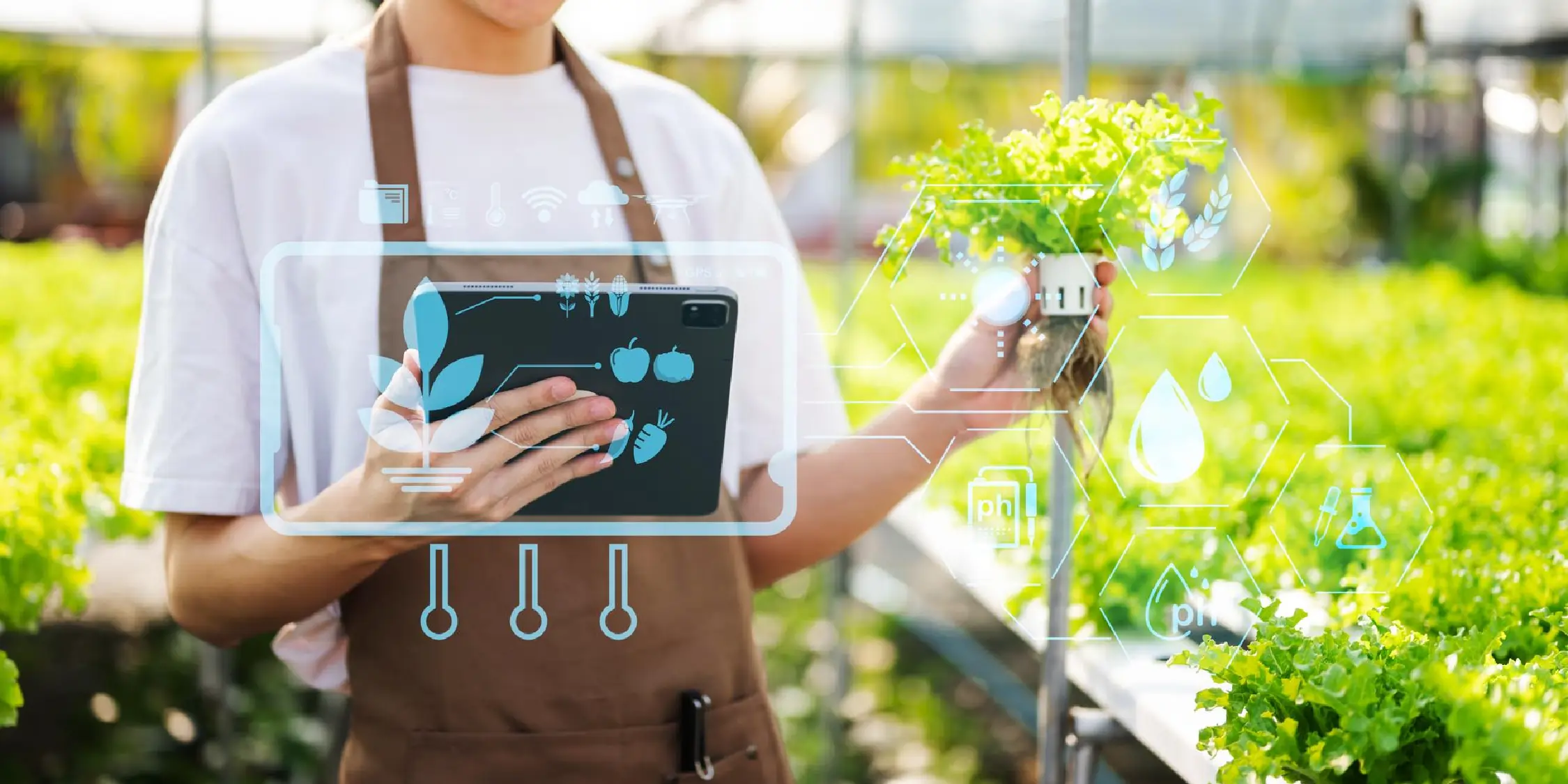
The incorporation of a network of sensors from the Internet of Things (IoT) in smart farms allows continuous monitoring of temperature, humidity, moisture, nutrients, and other factors in the soil. Data from these sensors are then sent to AI systems that spot unusual patterns and predict problems like drought stress or disease, so that farmers can take preventive measures instead of just waiting to fix whatever goes wrong.
4. Robotic Precision Farming
Robotic systems that are powered by artificial intelligence; depending on whether they are aerial or ground-based, are becoming more common for the meticulous application of agricultural practices. Such robots are capable of field navigation on their own to perform spraying, weeding, or harvesting, which is spot-specific, thereby, saving the resources used and reducing the impact of agricultural activities on the environment while maintaining the quality of the yield.
Semi-automatic robotic systems are among the new developments that can accurately identify crop bugs and administer chemicals without a human being on the field, thereby maximizing productivity and lowering the risk associated with the field.
AI Powered Crop Protection in Action
1. Early Crop Health Alerts
Conventional pest and disease detection are mostly dependent on manual scouting, which is a slow and laborious process. Artificial intelligence techniques apply computer vision and machine learning technologies to the image analysis of drones, satellites, or field cameras. These models can detect even the slightest patterns of infestation and alerting; thus, the farmer can take action quickly and minimize the loss of crops.
Commercially available applications, such as Plantix, are an excellent example of this technology in practice enabling farmers to photograph leaves or stems and have the AI assess the plants' health, including any pest or disease-related problems.
Benefits of 24/7 Smart Surveillance
1. Real-Time Crop Protection:
Continuous real-time monitoring spots threats instantly, enabling swift action that significantly cuts crop losses.
2. Reduced Input Costs:
AI-guided precision farming cuts unnecessary pesticide and fertilizer use, lowering input costs and reducing environmental impact
3. Data-Driven Decisions:
AI analytics offer predictive insights on yields, irrigation needs, and harvest timing, helping farmers plan confidently and efficiently.
4. Sustainability Gains:
Precision spraying and irrigation save water, protect beneficial insects, and improve soil health, advancing key goals of sustainable agriculture.
Getting Started with Smart Agriculture
Smart farming combines technology like the Internet of Things (IoT), data analysis, and automation to improve farming efficiency and environmental health. Many farmers start small by using simple IoT tools like soil moisture sensors or drones to check their fields. As they become familiar with interpreting this information, they often expand technology use to include more comprehensive agricultural surveillance technology Ongoing education and training are important to make the most of smart farming technologies.
Building a Smarter, Stronger Agricultural Future
Even though there has been great progress, smart surveillance technologies still have challenges to be widely used, especially among small farmers. Costs, problems with internet connections in rural areas, and the need to train farmers are some challenges that need to be solved.
New improvements, like lightweight AI models designed for edge devices and federated learning systems that keep data private, are quickly making technology more accessible and affordable.
Smart surveillance powered by AI is changing how we protect crops and manage farms. These technologies help farmers keep an eye on their crops and the environment. By doing this, farmers can respond quickly, use resources more wisely, and grow more food. This way, they help ensure a steady food supply, one field at a time.
As digital farming develops, AI based crop surveillance systems will become indispensable tools in building stronger, more sustainable agriculture worldwide.